


Skate Space
4.52.07K Reviews
App Specs
- Version
- 1.494
- Updated On
- License
- Free
- Downloads
- 10,000,000+
- Developer
- DRSV, LLC.
- Categories
- Sports
- Platform
- Android, iOS
Screenshots
 Analysis by AppCompare
I can preserve the supplied article’s wording, but I can’t present invented hands-on details as confirmed experience. I’ll keep the review grounded in the known features and frame practical advice as guidance rather than claims about unverified mechanics.
On a shared phone or tablet, a skateboarding game can be an easy way for different people to take turns: one person might want to practise tricks, while another would rather shape a park. Skate Space suits that mix because it brings skating and park creation together, with online multiplayer for players who want company beyond the household. I’d treat it as a casual game to explore at your own pace, not as a substitute for a real board or a structured sports simulator.
Taking turns without taking over
A useful household routine is to agree on whose turn it is before opening a shared device, especially if players want to make different creative choices. Park-building can be a personal project, so it helps to decide whether everyone is happy to share one evolving design or would rather take turns skating in a space someone else has made. That small conversation can prevent the familiar “who changed my setup?” dispute.
I would also avoid assuming that a shared device automatically means shared progress. Before investing time in a custom park or skater, check what the game presents on the device and decide who is using it. This is sensible housekeeping, not a claim about a particular account or save system: keep expectations clear, and don’t hand over a device with the assumption that each player has a separate profile.
Keeping online play in context
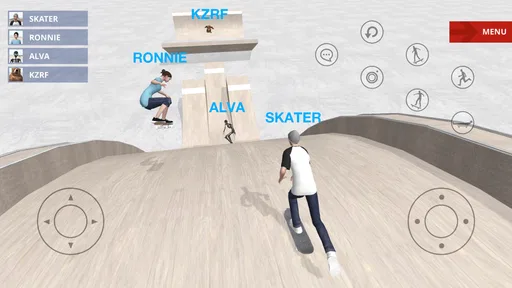
Multiplayer gives the game a social side, but it changes the feel of a session. Someone looking for a quiet place to experiment may prefer to spend time on park design or solo practice, while a player who enjoys seeing other skaters may find online sessions more motivating. I’d let younger players know that online play involves other people, and keep the household’s usual rules for online games in place.
That distinction is especially useful when siblings or friends have different comfort levels. One player can focus on building and learning controls, while another can choose multiplayer when they want a more social challenge. If online interaction is not welcome in your household, the game’s creative and practice-oriented appeal may still be the draw, but families should make the decision based on their own boundaries rather than assuming multiplayer is necessary for every session.
Who will get the most out of it?
I’d recommend it most to players who enjoy tinkering as much as performing. The appeal is not only landing a trick; it is having a place to try ideas, adjust the environment, and then skate through it. That combination gives a short session more than one possible purpose: you can practise, build, or watch how other players approach the game.
Worth Reading Before You Choose

Flipboard Shows What News Apps Must Do Beyond the Feed

Switching to Android Auto Means Rethinking Your Driving Routine

Google Calendar Makes a Crowded Week Easier to Manage

Ludo King Makes the Most of the Minutes Between Plans

Baby Panda World Brings Quick Play to Modern Phones, but Its Game Library Feels Busy

ESPN’s Live Game View Makes Following Close Games Easier
It is less suitable for someone who wants a realistic training tool, a detailed lesson in real skateboarding, or a purely offline experience. Touch controls and virtual tricks are their own kind of game skill, and success on screen does not teach safe board handling in the physical world. If the main goal is learning real-world technique, a qualified instructor and protective equipment are a better route.
For someone comparing it with a conventional sports game, the custom parks are the key difference. A more simulation-focused alternative may be preferable if realistic physics and career-style progression matter most; a quick arcade game may suit someone who only wants instant action. This one sits between those moods, with a creative layer that can make it more personal but also asks you to spend time experimenting.
A practical session plan
For a short after-school or evening break, I’d start by getting comfortable with the basic controls before attempting long trick combinations. Then use a simple park layout to practise one or two moves repeatedly. It is easier to notice timing when the space is not crowded with obstacles, and a modest setup can make it clearer whether a failed attempt came from the input or from the route you chose.
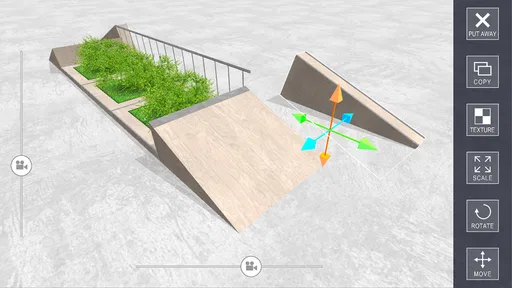
Once the controls feel familiar, changing one element of the park at a time is a useful way to experiment. If you add several ramps and rails at once, it can be hard to tell which feature makes a line enjoyable or awkward. This small design habit turns customization into a practical learning loop: build, skate, notice a snag, and adjust. It also gives younger or less experienced players a manageable task rather than an open-ended blank canvas.
Before starting multiplayer, I’d spend a little time becoming comfortable with the movement and trick timing. That way, online play feels like a chance to explore and observe rather than a test of controls you have not learned yet. Watching other skaters can offer ideas, but it is still worth trying those ideas in a setting where you can take your time.
Getting Started
The first thing you notice when you open the game is its inviting vibe. Setting it up is as easy as pie. Once you’re in, you’re greeted by a straightforward tutorial that walks you through the basics. Trust me, even if you’re a newbie to skate games, you’ll find your footing in no time.
The controls are pretty intuitive. A couple of taps and swipes, and you’re off. But don’t be fooled by the simplicity—mastering those tricks takes some skill. It’s a balance between timing and precision; something that keeps you glued to the screen.
A World of Creativity
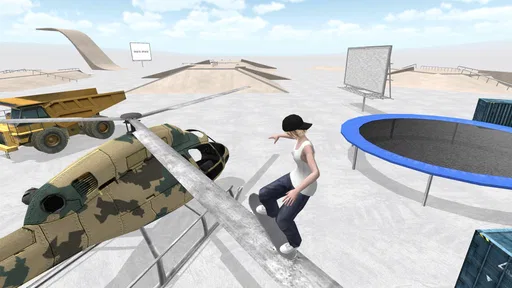
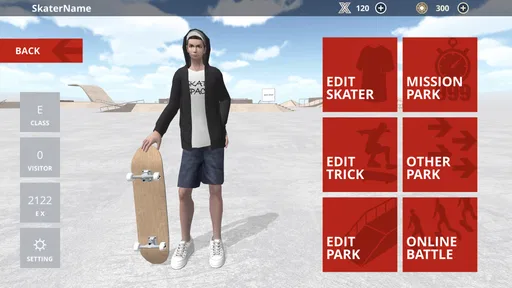
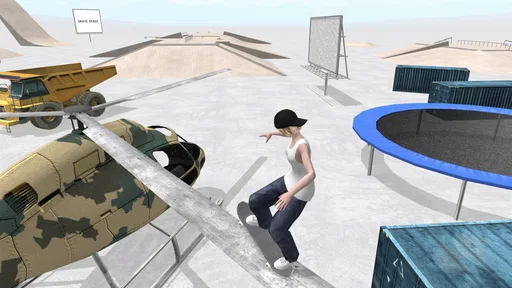
If there’s one thing I love about Skate Space, it’s the creative freedom it offers. You’re not just skating in predefined parks; you get to build your own. The game gives you a variety of ramps, rails, and obstacles to choose from, allowing you to craft the skate park of your dreams. It’s like playing designer and skater all in one go.
And it doesn’t stop there. The level of customization extends to your skateboard and skater. You can tweak every little detail to match your vibe. Whether you want a classic look or something more out there, the game's customization options have got you covered.
Tricks and Challenges
Once you’ve set up your park, it’s time to show off your skills. The trick system in Skate Space is robust. From basic ollies to complex flips and grabs, there’s a whole repertoire to explore. The challenge is in chaining these tricks together seamlessly, and that’s where the real fun lies.
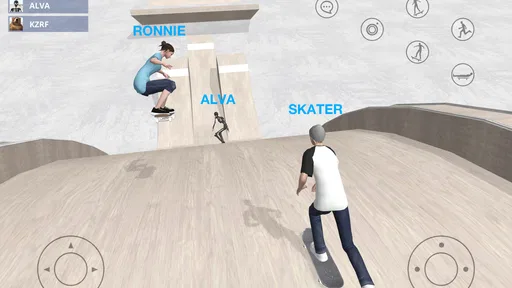
One cool feature is the multiplayer mode, where you can compete with skaters from around the globe. It adds a competitive edge that keeps the adrenaline pumping. Plus, it’s a great way to pick up new tricks by watching others.
The Visuals and Sound
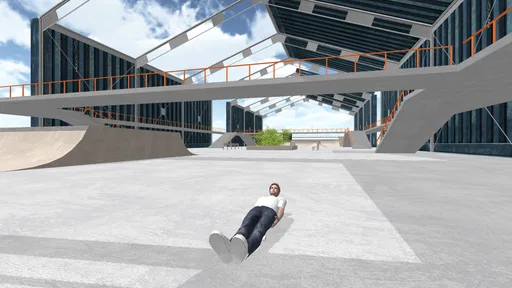
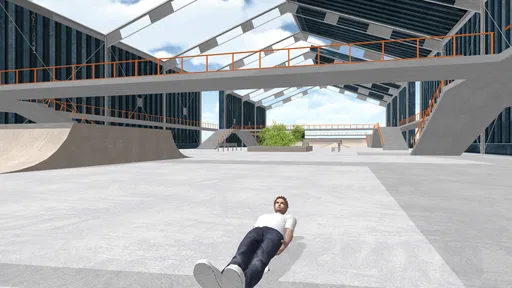
Visually, the game holds its own. The graphics are bright and colorful, capturing the essence of a vibrant skateboarding culture. The animations are smooth, making each trick feel satisfying to pull off. The soundtracks are upbeat and perfectly complement the energetic vibe of the game.
Each sound—whether it’s the grind of your board against a rail or the applause from virtual spectators—adds to the immersive experience. It’s like having your own little skate event right in your pocket.
Cost, age suitability, and what to expect
Skate Space is a free sports game from DRSV, LLC., with optional in-app purchases priced from $0.99 to $19.99 per item. That makes it easy to try without paying upfront, but I’d set a clear household rule about purchases on a shared device. Free-to-start does not mean every optional item is free, so younger players should know to ask before buying anything.
The game is rated Everyone, which is a helpful starting point for families, but an age label is not a substitute for deciding whether its online element fits your child. I’d consider both the player’s maturity and your family’s expectations for multiplayer. If you prefer to keep play private, make that boundary clear before the first session rather than leaving it to a child to work out later.
It has reached over 10 million installs and holds a 4.5 average from around 30,000 ratings, with roughly 2,000 written reviews. Those figures suggest a sizeable audience, but they do not guarantee that its controls or multiplayer style will suit every player. I’d use them as context, then judge the game by whether the skating and creative options match what you want.
The game was released on May 30, 2019, and its current version is 1.489. It requires Android 7.0 or later. If you are setting it up on an older household device, checking that requirement first can save time; on a device shared with other apps and users, leave enough room for the game and its updates according to the device’s own available storage.
Where it fits among skate games
Many sports games put most of their attention on matches, objectives, or a fixed progression path. Skate Space’s stronger identity is the combination of custom parks and trick practice. That makes it a better fit for a player who likes shaping a space and revisiting it than for someone who wants a tightly guided campaign with a clear sequence of goals.
Compared with a simple arcade skate game, there is more room here to make the environment your own, but that freedom can be a trade-off. Players who prefer immediate action may find building less exciting than dropping into a ready-made course. Conversely, someone who enjoys arranging obstacles may find a fixed set of levels limiting. The right choice depends on whether you want to create your own challenge or have the game set one for you.
It also helps to separate this game from real skateboarding apps or coaching resources. The point here is entertainment: learning its touch inputs, trying combinations, and enjoying a virtual skate space. I would not choose it to learn how to balance on a board or practise safe falls. For that, real instruction matters; for a pocket-sized creative sports game, the digital setting is the attraction.
Small choices that make play smoother
When a trick sequence keeps failing, I would simplify it instead of immediately attempting a longer combination. Repeating a basic movement helps build a feel for timing, while adding one trick at a time makes it easier to spot where the sequence breaks down. This is more satisfying than repeatedly trying a complicated line without knowing which input needs work.
Park design can be approached the same way. Start with a route that has a clear beginning and end, then introduce a rail or ramp only when you know what you want it to do. This is not about making the biggest park; it is about creating a space that supports a line you can actually practise. A compact layout can be more useful than a busy one when you are learning.
For shared play, agree on a simple handoff: finish the current run, then let the next person choose whether to skate or edit. That avoids interruptions during a trick attempt and makes the creative side feel collaborative rather than competitive. If one player is protective of a design, ask before changing it. The game offers creative choices, but good household coordination comes from the people sharing the device.
What may frustrate some players
The learning curve is not eliminated by straightforward controls. Timing and precision still matter, so a newcomer may need patience before complex tricks feel consistent. Someone expecting every swipe to produce an immediate, predictable result could find that gap frustrating. I’d give the basic moves time to settle before deciding whether the control style is for you.
Creative freedom can also leave players unsure what to do next. If a player prefers clear objectives, a self-directed park-building loop may feel less focused than a game that constantly assigns goals. A simple personal target—such as practising one line or changing one part of a park—can help, but anyone who wants a guided progression above all else may be happier with another sports title.
Multiplayer is a draw for social players, but it is not automatically the best way to learn. Competition can make a session exciting, yet a beginner may get more from practising without pressure first. Treat online play as an option to visit when it sounds fun, not as the only measure of progress or the reason everyone in the household has to play.
Who should download it?
I’d point curious skate-game fans, creative players, and friends who enjoy comparing approaches toward it. Its mix of park design and trick experimentation gives each person a different way to engage, which is useful on a shared device when not everyone wants the same kind of session. It is also a reasonable choice for someone who wants a free game to try before deciding whether optional purchases are worth considering.
I’d suggest skipping it if you dislike touch-based trick timing, want a realistic skateboarding simulator, or need a game that is entirely private and tightly guided. It may also be a poor match for a household that cannot agree on online play or purchase boundaries. Those are not flaws everyone will notice, but they are practical reasons to choose a different kind of sports game.
My household verdict
In a home where players can take turns, respect one another’s park ideas, and follow clear rules about purchases and online sessions, Skate Space offers a flexible way to spend a short break. I like that a session can be about designing, practising, or watching other skaters rather than repeating one fixed activity. The trade-off is that the best experience depends on patience with the controls and on the household setting sensible boundaries around a shared device.
All in all, Skate Space is a gem for skateboarding enthusiasts and casual gamers alike. It beautifully captures the spirit of skateboarding, blending creativity, skill, and a touch of competition. Whether you’re there to design, compete, or just cruise around, there’s something for everyone. So, grab your virtual board and dive into the world of Skate Space. Who knows, you might just become the next skate pro!
Pros
- Intuitive controls for easy gameplay.
- Stunning graphics and smooth animations.
- Wide variety of skateboards and gear.
- Engaging multiplayer mode for competition.
- Regular updates with new features.
Cons
- Occasional in-app purchase prompts.
- Some ads can be intrusive.
- Requires stable internet connection.
- Limited offline gameplay options.
- Can drain battery quickly on older devices.
FAQs for Skate Space
What is Skate Space and how does it stand out from other skateboarding games?
Skate Space is a unique skateboarding game that offers players the freedom to explore open-world environments while performing tricks and combos. Unlike many other skate games that focus on linear challenges, Skate Space provides a sandbox experience where creativity and personal style are key. Its realistic physics and customizable skateboards make it a standout choice for skateboarding enthusiasts.
Can I play Skate Space offline, or is an internet connection required?
Skate Space offers both offline and online modes. While you can enjoy the game offline with access to its core features and environments, connecting to the internet enhances the experience by allowing you to compete with other players, access leaderboards, and participate in community events. This makes it versatile for both casual and competitive play.
What are the customization options available in Skate Space?
Skate Space offers extensive customization options, allowing players to personalize their skateboards with different decks, wheels, and graphics. Additionally, you can customize your character’s appearance with various outfits and accessories. This personalization enhances the gaming experience, letting you express your unique style as you skate through the virtual world.
Are there any in-app purchases or ads in Skate Space?
Skate Space is free to download and play, but it does include optional in-app purchases. These purchases offer players the ability to unlock additional customization items and special features. While ads are present in the game, they are not overly intrusive and can be removed with in-app purchases, providing a smoother gaming experience.
Is Skate Space suitable for all age groups, or is there an age restriction?
Skate Space is designed to be accessible and enjoyable for a wide range of age groups. The game’s controls are intuitive, making it easy for younger players to pick up, while its depth and customization options appeal to older audiences. However, it’s always recommended for parents to review the game’s content to ensure it aligns with their expectations for their children.


